

From a Dusty Desert Town to The Roaring ‘Teens and ‘Twenties

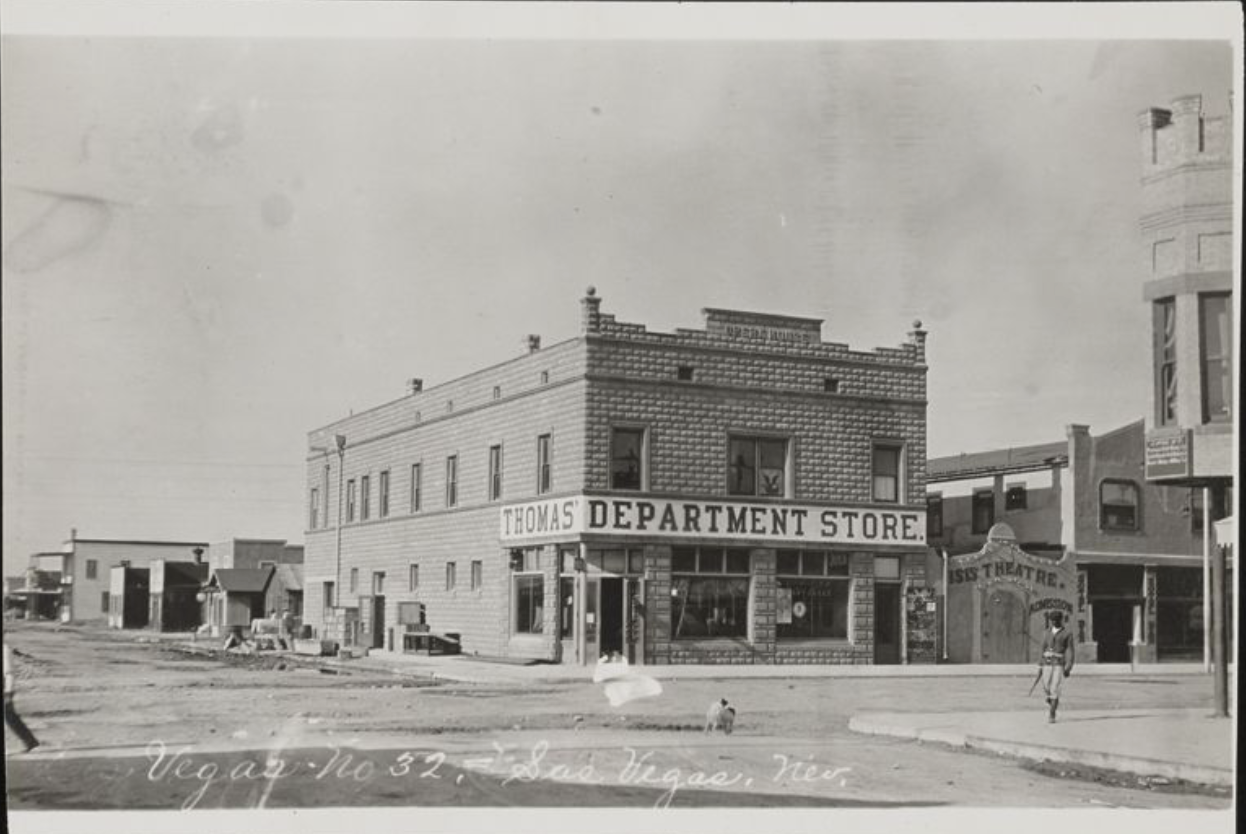
Before there was the glow of neon or the crooning of the Rat Pack, there was sagebrush and open desert. Back when “The Strip” was still known as Highway 91, back before the tagline “What happens in Vegas…” existed, there were a bunch of tough pioneers who started a frontier town in the absolute middle of nowhere. But how did that happen? How did we go from dusty old saloons and dance halls to the entertainment behemoth that is now modern Las Vegas?
From Dust to Dreams
Let’s start our story with a little background. How did this little rugged little railroad town spring up in the absolute middle of nowhere? Though usually considered a newer city on the West Coast, Vegas is one of the oldest places on record in Nevada, starting with traders on the Old Spanish Trail in the 1820s. First officially noted on a map published by US Congress in 1844, Las Vegas means “the meadows” in Spanish, named after the natural springs and fertile areas, in what would now be considered downtown or “old town” Las Vegas. As a modern tourist dying of heat stroke while walking from casino to casino in the middle of summer, you’d never guess that water was originally plentiful here. So plentiful in fact, that you could apparently poke a stick in the ground and water would come gushing out. In fact, the first times I saw historic photos of downtown Las Vegas, I couldn’t actually believe my eyes. With large shady groves of trees and running streams, photos from the late 1800s and early 1900s look almost swampy. The native Paiute tribe had lived on this land for hundreds of years, taking advantage of the natural water source. Later, as people began traversing between California and Salt Lake City, a pit stop in between became crucial. At this time, the west was experiencing an enormous rail expansion as people were flooding west, and the railroad companies built support towns along the way. In 1854, Congress established a regular monthly mail service along that route, increasing the importance of Las Vegas as a crucial junction for commerce and travel. In addition, in the 1850s the Mormon trail became a busy route for wagon trains, and Las Vegas was a popular stop. In 1855, Brigham Young sent an expedition of 30 men to Las Vegas to establish a fort. However, it was very short lived due to the harshness of the environment, and they closed the fort in 1857. Sidebar: if you are visiting Las Vegas, you can go tour the historic fort which includes both original buildings, and modern replicas as part of the Nevada State Park system. It’s a nice afternoon and I recommend it!
After the Mormon fort closed, next up to try their hand in the inhospitable Mojave desert was prospector Octavius Decatur Gass, who came to Nevada trying for gold. When he was unsuccessful on the gold part, Gass tried his hand at ranching, took over the deserted Mormon fort, and began farming. He had more success than the previous tenants, and he did wind up with a successful ranch, he was even able to grow grapes and create his own wine, making his ranch known as the best rest stop on the trail. Slowly but surely, the small footprint of what would become the town of Las Vegas was springing up amongst the sagebrush in the desert valley.
Frontier Fables
So we’ve talked a bit about railroads and westward expansion. Here’s where we get some real wild west type history. Ready to hang it up, Gass sold the Las Vegas ranch to Archibald and Helen Stewart in 1881. Things were humming along for a few years, until a real Hatfield-and-McCoy situation emerged. In 1884, neighboring frontiersman Conrad Kiel (Kyle) and Archibald Stewart had a dispute going on, which resulted in standoff and wild west style gunfight. Archibald was killed, and Helen received a blunt, handwritten note instructing her to send a wagon to retrieve the body. Pregnant, and with four other children at home, Helen must have wondered how she would survive. However, this story winds up on a happy note, as Helen lived on, and not only survived, but thrived. Proving herself an extremely capable lady, she ran the ranch for 18 years, renting tents to weary travelers passing through town. She was also a kind of one-woman welcoming committee, and was known to always have a pot of coffee waiting, as she could see the dust kicked up as people approached the town. Ever the savvy business woman, Helen correctly read the tea leaves, and knew that the railroad would continue to expand in this area, and that her ranch would become valuable real estate. She continued to buy parcels of land, and eventually became the largest landholder in the Vegas valley. Yes, queen! Talk about an independent woman. Oh, and yes, if you’re like me, that Hatfield and McCoy historical reference definitely came from watching Looney Tunes growing up.
A Town Divided
It was now time for Vegas to expand, and to do so, it was going to be a real David and Goliath storyline. This act had two major players, a Canadian surveyor named JT McWilliams, and one of the wealthiest men in America at the time, Montana Senator and railroad tycoon William Andrews Clark. After surveying the area, JT McWilliams found 80 acres of land that had been unclaimed on the west side of the train tracks, and he purchased it and subdivided it into the platts of the original Las Vegas townsite. Clark took an interest in this area due to the proximity and promise of continued rail expansion. In 1902, Helen Stewart sold her ranch property and water rights to Clark, where he also planned to subdivide the land into platts for purchase on the east side of the train tracks. Las Vegas now had competing townsites. But who would emerge victorious? Well, in short, money talks. Clark and his partner, the Union Pacific railroad company, made extravagant promises for their townsite, like oiled streets and water on every lot. McWilliams couldn’t compete. What we would know as Las Vegas began on May 15, 1905 with the land parcel sale for Clark’s townsite. Clark ran a mean PR campaign. Drumming up interest by campaigning on the back of his private rail car, applications exceeded available parcels 3 to 1. Interested parties took accommodations in the Hotel Las Vegas, a canvas tent-hotel that opened the night before the auction, outfitted with the finest of details and appointments, given the circumstances. Parcels sold swiftly, and sales totaled $265k that day, which was an enormous sum for the time. Demand was so high for Clark’s parcels, landowners from McWilliam’s abandoned their existing parcels and bought new ones from Clark, literally rolling their belongings across the train tracks to the new townsite. McWilliam’s Las Vegas acquired the unfortunate nickname of “Ragtown.”
Here’s a juicy sidebar about William Andrews Clark: A shrewd self-made man, Clark was an industrialist tycoon that one could probably refer to as a “robber baron” and basically admitted he bought his seat in the Montana senate, though he famously professed that he “never bought a man who wasn’t for sale.” However, Clark’s reputation preceded itself, so much so that famous American writer and humorist Mark Twain was reported to have called Clark “as rotten a human being as can be found anywhere. He is a shame to the American nation.” Ouch. I mean, if Mark Twain calls you out, that says something. So while McWilliams may have been outmaneuvered, he may have ultimately had the last laugh, as Clark’s long term reputation was mixed at best.
Regardless of the chain of events and players involved, the dusty frontier town was now officially springing up out of the desert. Las Vegas was on its way.
Boozy Burros

Las Vegas was a railroad town, meaning even in its early days it was a transient town where workers, mostly single men, came and went depending on the work available. There was a “deep sense of pride in the ability to survive in the rough landscape.” This hardiness naturally gave way to businesses that helped customers blow off some steam after a long day’s work. Town sprung up everywhere after the parcel sale in 1905, including the fair share of saloons and gambling joints. One of the favorite pictures of this era is an endearing shot of two fuzzy and adorable looking burros apparently wandering in off the street to belly up to the bar, while three gamblers play cards in the foreground. The bartender’s matter of fact expression makes you think this was just all in a days work in early Las Vegas.
Adding to this frontier town lore was Sheriff Sam Gay. Straight out of a movie, he was the quintessential picture of what you would think of as a sheriff of an old west town, and was known for antics like getting drunk and shooting out the electric lights on Fremont street. Painting a picture of early Vegas, Sam said “From 1905 to 1910, Las Vegas was a rough and tumble western town. Five men dead for breakfast one Sunday morning and ten men wounded.” Seems like a little bit of rowdiness and rebellion has always been a part of Vegas history. And nowhere was that more conspicuous than the infamous Block 16, the portion of the township where gambling, drinking and shall we say, evening entertainment, was found. Throughout various times in Vegas’ history, both gambling and alcohol were technically illegal. But, I suppose there is a major difference between illegal and enforced, and Sam Gay would have said the same. It was a commonly held belief that “Prohibition was something that was happening somewhere else.” In fact, when Nevada officially went dry in 1918, a year before temperance was passed nationally, nobody paid much attention in Vegas. The unofficial word was not to worry about stopping serving, just take down any signs that mentioned booze. Later, in 1923, sticking true to their rebellious spirit, Nevada repealed their approval of the Federal 18th amendment of prohibition, meaning it was up to federal jurisdiction for enforcement. I.e. local law enforcement would not prosecute, so federal agents had to come from out of state would have to come in to enforce prohibition. And you can imagine how often that happened.
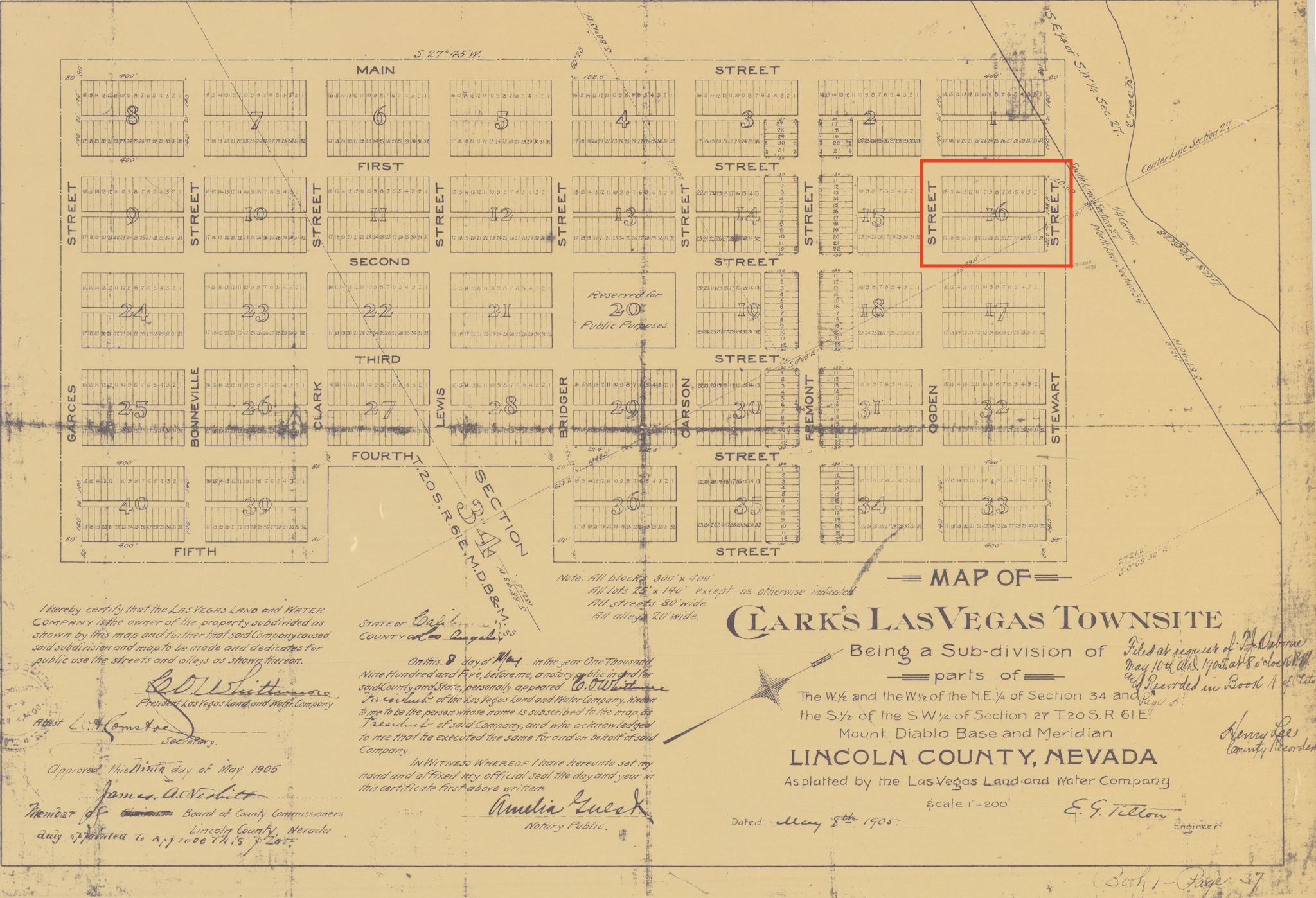
Infamous Block 16 was the center of all the shenanigans. Historian Stanley Paher says: “Riotous Block 16 was the only seat of pleasure. Nearly every night, including Christmas, it ran full blast. The Gem, the Red Onion, the Turf, the Favorite, the Double-O, the Star, the Arcade saloons, and the Arizona Club were continually crowded with sharp-eyed dealers and boosters and men standing around trying to solve the mysteries of gambling…That part of Las Vegas looked like a rip-roaring, whiskey-drinking, gun-toting, gambling town, while the rest of the town was conservative and business-like.” You’ve maybe seen photos of this super early Las Vegas, dotted by these rough and tumble bars, including most famously The Arizona Club. The Arizona Club was the most luxurious place for hundreds of miles and offered roulette, blackjack, nickel slots, with an ornate 30 ft mahogany bar illuminated by gas lights. Can you imagine what a sight that must have been for desert denizens at the time? It must have felt like an elegant oasis in an otherwise rough and tumble frontier town. Interestingly, this mahogany bar later wound up inside the Hotel Last Frontier’s watering hole known as the Horn Room, named for it being decorated with steer horns. We will cover the Hotel Last Frontier and this bar and showroom in another episode.
The Roaring ‘Teens and ‘Twenties

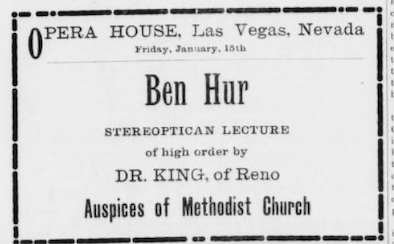
The early 1910s and teens brought entertainment to the valley, in the form of the most popular entertainment of the time: silent movies. Radio was still off in the distant future as a mainstream media, and even though Las Vegas had a population of less than 1,000 at this time, Tinseltown era movie theaters began to populate the dusty streets of town. As early as 1909, Las Vegas had both an Opera House, and the cutest little movie house there ever was called the Isis Theater.
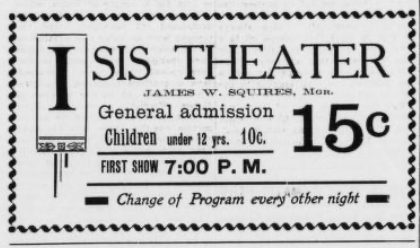
I’ve now spent many an errant afternoon poring over digitized copies of the Las Vegas Age, which was the town newspaper that was printed from the Overland Hotel, starting in 1905. Digging into historical advertisements and observing life at the time through the lens of this newspaper has become a really lovely part of making this podcast.
I find those little snapshots of what culture and entertainment was like at the time truly fascinating, and I love learning about places I never knew existed. Did you know Vegas had a historic opera house? I didn’t!

In 1912, another theater opened, called the Majestic, showing silent films, newsreels and traveling vaudeville acts, giving Las Vegas residents a window into the outside world, and a distraction from their day to day life.
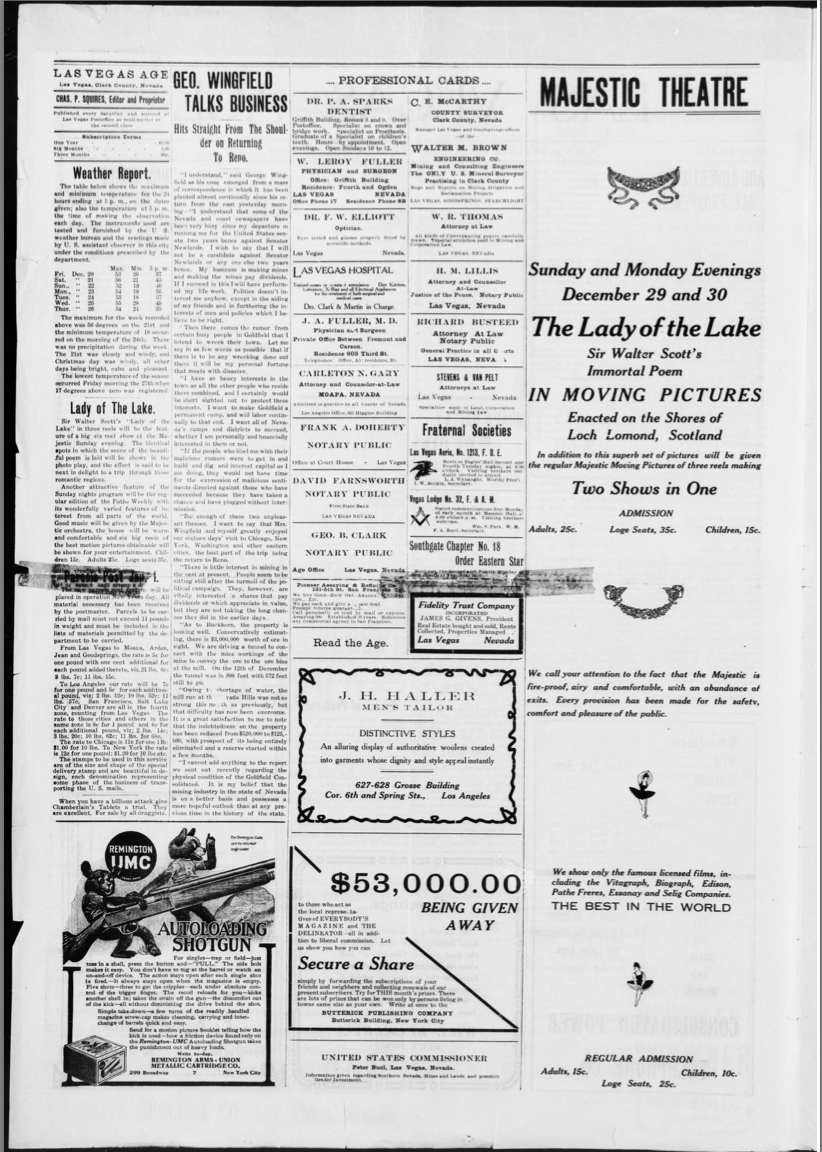
For 10 to 15 cents, you could spend a few hours escaping into the most recent silent film from Tinseltown. Images I’ve come across, show the exterior of the Majestic theater advertising now-lost silent films like The Line at Hogans, or later, The Lady of the Lake starring silent screen leading man Percy Marmont.
Fun sidebar: English actor Percy Marmont was the namesake of the street that the famed Chateau Marmont hotel in Los Angeles was built on, giving the hotel its name. If you’d like to learn more about the hotel and its glamorous Tinseltown history, check out the pilot episode on this topic. End sidebar.
Early silent era movies weren’t just restricted to the silver screen in Las Vegas. In 1915, the silent episodic series named “The Hazards of Helen” filmed several episodes in Las Vegas. This adventure film serial was very popular at the time, and featured lively actress Helen Holmes. Here’s the fun twist, rather than being the damsel in distress, Helen was instead the one to save the day! She epitomized what was called the “new woman” at the time, a term for the emerging group of women who were independent and unafraid, who moved to big cities on their own, taking jobs and supporting themselves, etc. And in Helen’s case, solving crimes and taking down bad guys! Most of this series was set on railroads, or had railroads as part of the storyline, so much so that Helen was known as “The Railroad Girl.” Helen specialized in doing her own daredevil stunts, including wild things like leaping off a bridge onto a rail car, escaping from the bad guys by hiking up her skirts and disconnecting rail cars, and jumping off a moving horse onto the running board of an escaping car. In a particularly fun scene I came across, Helen, trapped in a runaway train car by the bank robbing bad guys, is desperately looking for an escape. Struck by a madcap idea, she rips off her petticoats, tears them into strips, and attaches them to a sort of makeshift fish hook, fashioned out of a hairpin pulled from her coiffure. She then trails this contraption out the railcar window, where she is able to pick up an errant gun, shooting the train switching mechanism and stopping the train, thus saving the day. I think McGyver could have learned a thing or two from our fearless heroine. Many of these shorts are available to watch on Youtube, and it’s quite fun to spend a few minutes of your day with plucky, adventurous Helen.

But it wasn’t just silent movies or Tinseltown stars that were performing in Vegas at this time. In 1917, the ultra famous ragtime pianist Jelly Roll Morton came to play the aforementioned Gem Saloon in Block 16. His girlfriend and great love Anita Gonazales was running the local Block 16 saloon known as The Arcade, so he settled in for a short time. Ferdinand LaMothe, as he was born, became famous for his piece “Jelly Roll Blues” which is believed to be one of the first published jazz compositions. He is also famous for his big, flamboyant personality – he often claimed he invented jazz, and has been known to say to fellow musicians: “You know you will be working for the world’s best jazz piano player … not one of the greatest — I am the greatest.” His downtown Las Vegas performances were attended by patrons of all colors, and were so lively that they brought extra scrutiny from the Clark County Grand Jury, who tried to run him out of town by issuing a public notice about all the piano playing happening in Block 16. Still, how fun it must have been to be walking the streets of downtown at that time, and hearing the ragtime music tumbling out of the saloon doors from this virtuoso piano player.
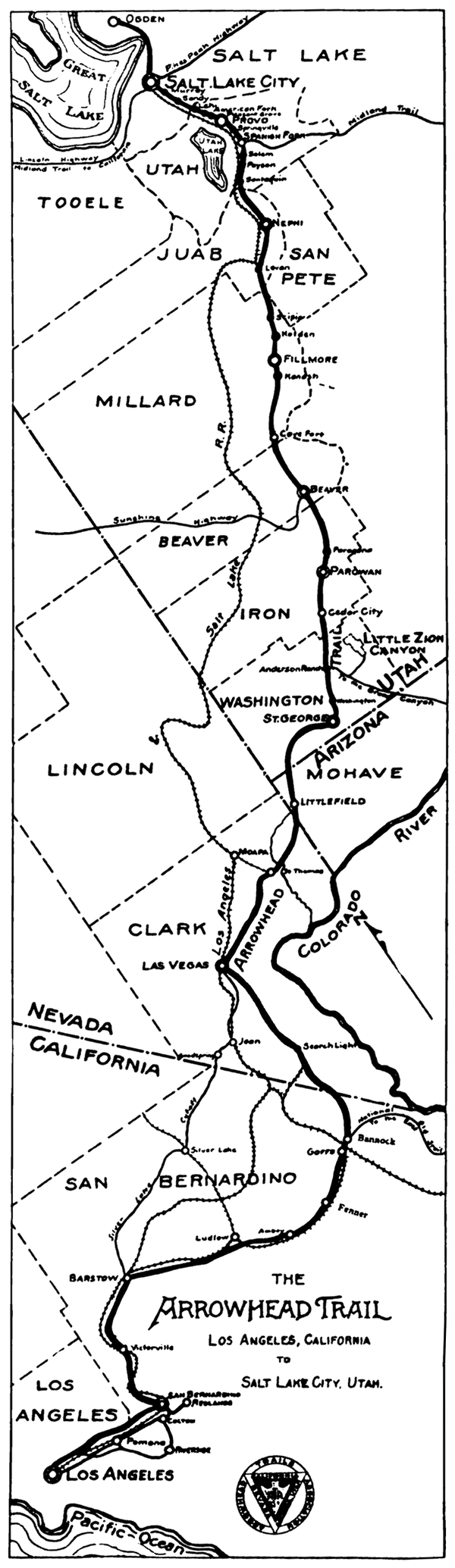
Entertainment was about to change again in the late 1910s by the way transportation changed. As Model T’s were starting to roll off of assembly lines, the car was starting to become an important method of transportation. Beginning in 1914, construction started on a highway connecting Los Angeles to Las Vegas. The precursor of what’s now known as the I-15, the “Arrowhead” Trail” started to stitch together existing dirt roads and older Native American trails into a cohesive route to bring tourists across the Mojave desert. Las Vegas was about to get a whole lot closer to the rest of the country, and start to morph from a small frontier town to a more established city. The Arrowhead Trail would also be the start of an important pipeline of new visitors to Las Vegas: the leisure traveler.
Las Vegas was now embarking into the 1920s, and it was a magical time, full of new beginnings, new developments, and new technological developments. In 1922 the Majestic Theater started radio shows recorded with a live audience, as the radio was quickly becoming the dominant media at the time. And in 1926, the first air mail service was established between Las Vegas and LA, now made the trip in 2 hours and 20 mins, as opposed to the 10 hours by rail. These technological advances started to bring the world closer to Las Vegas, and to bring Las Vegas to the wider world. Also in 1926, one of the first tourist attractions occurred in Las Vegas: a trap-shooting event hosting over 300 people, with the opening celebration marked by a 50 piece band marching down Fremont Street. Vegas was starting to be on the map!
Another exciting new development happened in the 1920s, which now has become synonymous with Las Vegas: neon. Between 1928 and 1930, the Overland hotel becomes the first establishment to install a neon sign, stating the simple word “HOTEL” above their entry. The importance of this first modest step into the electrification of the city cannot really be overstated, as other businesses started following suit , creating a kind of “neon battle” in downtown. This tiny desert town was taking its first steps towards becoming the glowing beacon we all know and love.

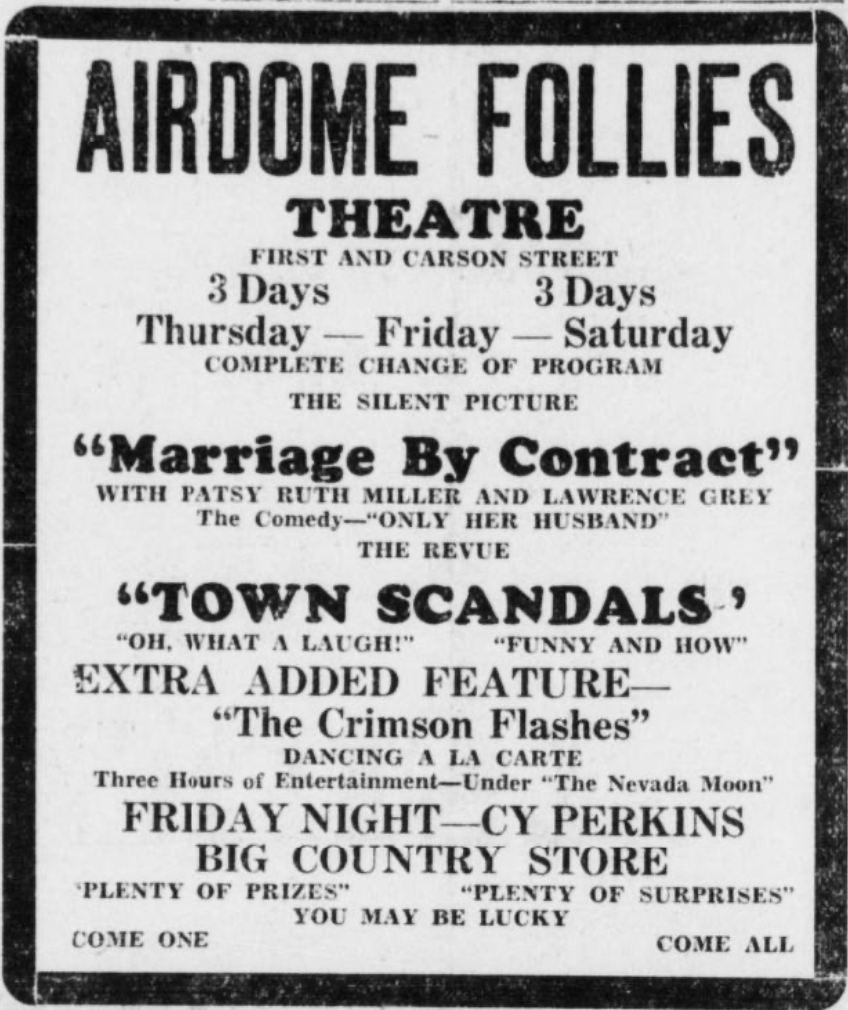
Early Las Vegas also had another theater option for entertainment hungry residents: the Airdome Theater, which was an open air theater on First and Carson (roughly where the Golden Nugget is now), which promised “Three hours of entertainment under the Nevada Moon” and showed silent films, vaudeville revues, and hosted dancing under the stars in the warm Nevada desert evenings.

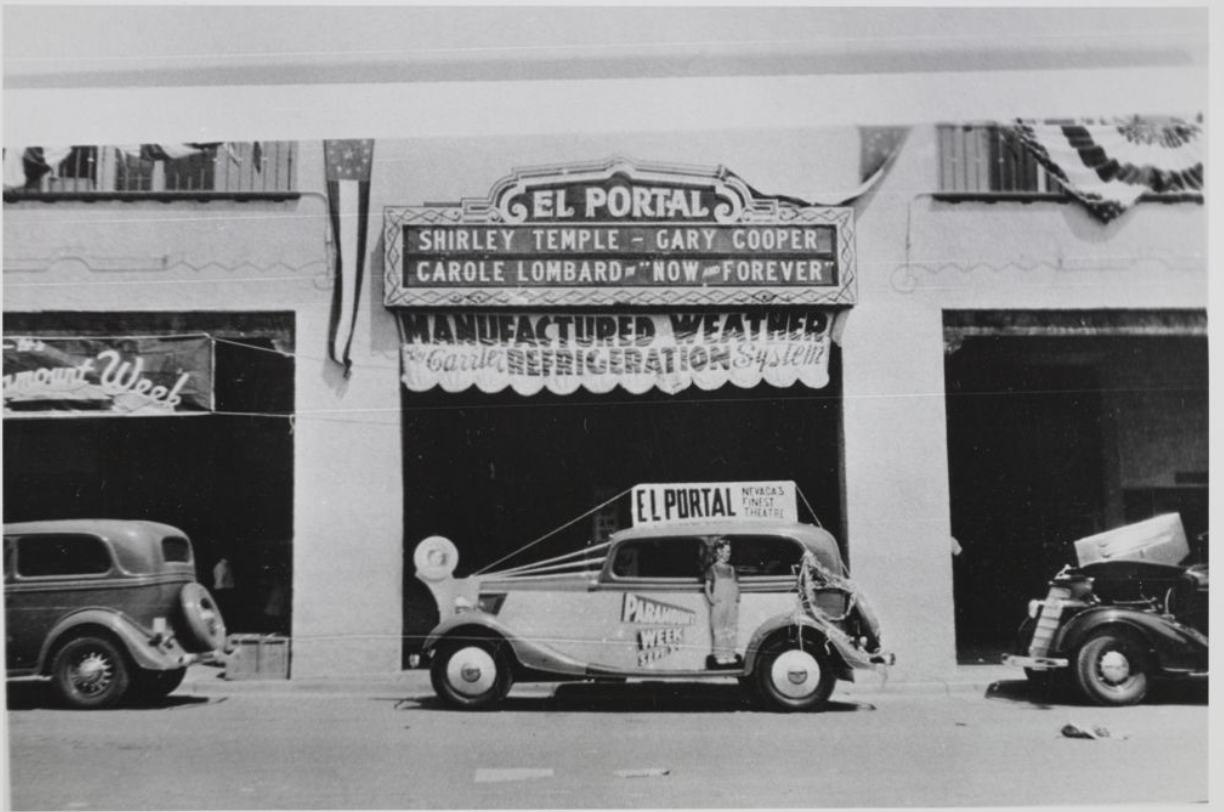

Then, in 1928, another silent film house opened: the El Portal movie theater. The premiere film was Paramount Pictures “Ladies of the Mob,” now considered a lost film, featuring the absolute super star of the time, none other than “the It Girl,” Clara Bow. Bow was a silent screen siren who eventually wound up successfully making the jump into talkies later in her career. She got her namesake from appearing in the 1927 movie “It” with “it” being a moniker for sex appeal, charm and vivaciousness. The plucky red-headed Clara personified the 1920s, and it’s hard to overstate her star power at the time. Clara would have a super star career until her retirement in 1931, when she married famed actor Rex Bell. Bell was famous for his work in westerns, and some of the magic of the desert must have rubbed off on both he and Clara, because later in 1932, they purchased a parcel of land in Searchlight, NV, about an hour south of Las Vegas. Together, they lived an idyllic frontier lifestyle in an absolutely beautiful ranch house, which you can still visit today. (On a personal side note, I think I would personally die of happiness to live there.) Ever the gracious hosts, they filled their home with celebrities from their time in Tinseltown, including Clark Gable and Carole Lombard, Errol Flynn, Lionel Barrymore, John Wayne and even a young Clint Eastwood. The Walking Box Ranch further paid homage to their years on the screen by being named after the type of cameras that were used in silent films at the time. I’ll go into Clara, Rex, and Walking Box Ranch in a future episode, because it’s too fascinating of a story to miss an even deeper dive.
And it wasn’t just Clara Bow and Rex Bell who fell in love with the Nevada desert. Nevada nuptials were starting to become popular for Tinseltown elite. In 1929 screen stars John Gilbert and Ina Claire decided to marry in Las Vegas. While their names may not be super familiar now, they were both big stars at the time, so much so that she was featured on the cover of Time magazine in 1929, with her story mentioning their Vegas elopement. Gilbert was a silent film star whose many movies included hits such as Eric Von Stroheim’s The Merry Widow and King Vidor’s The Big Parade, and his star power was so bright that he rivaled Rudolph Valentino as a box office draw. Ina was a vaudeville actress turned Broadway musical star who was in the Ziegfeld Follies of 1915, Cecil B. deMille’s The Wild Goose Chase, and later, in 1939’s Ninotchka with Greta Garbo. You can still see her star on the Hollywood Walk of Fame.
The roaring 20s would close out for Las Vegas with the announcement of the largest building project in the nation: the passage of the 1928 Boulder Canyon Project Act, now known as the Hoover Dam. Construction would start a few years later, but this project approval was a huge financial boon for the area, spurring huge influx of residents and general excitement and anticipation. While the rest of the country became mired in the Great Depression, Vegas was experiencing a boom because of the dam project. Still, there were more unemployed people than there were jobs. With only about 5,000 people living in Las Vegas at the time, nearly 20,000 people showed up looking for work on the dam project, so the small desert town was simply busting at the seams. All those dam workers came with lots of pocket money, ready to spend it in town on entertainment of all types. Things were looking up in Las Vegas, and the new decade was about to begin. But that, my friends, is a story for our next episode. Join us next time as we go into the Las Vegas entertainment scene in the 1930 and 40s, from Tinseltown weddings and divorces, to the start of legal gambling, to the first glamorous resorts beginning to take hold, to the beginning of the wave of celebrities coming to perform in Las Vegas, like Judy Garland in her “Gumm Sisters” act, Pearl Bailey, Sophie Tucker, Bill “Bojangles” Robinson, and many many more, giving Vegas credibility as an entertainment destination. The transition from a small, dusty frontier railroad side stop to a fabulous, vibrant and exciting entertainment town was about to begin.
Show Notes
KCLV Channel 2: The City of Las Vegas: Documentary Series
HistoricLasVegasProject.com
NeonMuseum.org
“A Short History of Las Vegas” Barbara Land and Myrick Land
“Las Vegas, The Entertainment Capital” Donn Knepp
Library of Congress, Las Vegas Age
UNLV Special Collections Archive
[Union Pacific Railroad Photographs, 1900-1909]. Collection #. Special Collections & Archives, University Libraries, University of Nevada, Las Vegas. Las Vegas, Nevada.
map000140. Union Pacific Railroad Photographs. PH-00043. Special Collections and Archives, University Libraries, University of Nevada, Las Vegas. Las Vegas, Nevada.
(1931, June 24) Las Vegas age. Retrieved from the Library of Congress, https://www.loc.gov/item/sn86076141/1931-06-24/ed-1/.
(1905, January 1) Las Vegas Age Las Vegas, Lincoln County, Nevada -1947 Online Resource. Retrieved from the Library of Congress, https://www.loc.gov/item/2021270602/.
(1931, December 3) Las Vegas age. Retrieved from the Library of Congress, https://www.loc.gov/item/sn86076141/1931-12-03/ed-1/.
(1931, May 2) Las Vegas age. Retrieved from the Library of Congress, https://www.loc.gov/item/sn86076141/1931-05-02/ed-1/.
(1910, December 31) Las Vegas age. Retrieved from the Library of Congress, https://www.loc.gov/item/sn86076141/1910-12-31/ed-1/.
pho006124. Squires Family Photographs. PH-00002. Special Collections and Archives, University Libraries, University of Nevada, Las Vegas. Las Vegas, Nevada.
pho030561. Sarah Vinci Photograph Collection, approximately 1920-1991. PH-00268. Special Collections and Archives, University Libraries, University of Nevada, Las Vegas. Las Vegas, Nevada.
pho007476. Elton and Madelaine Garrett Photograph and Architectural Drawing Collection. PH-00265. Special Collections and Archives, University Libraries, University of Nevada, Las Vegas. Las Vegas, Nevada.
pho007476. Elton and Madelaine Garrett Photograph and Architectural Drawing Collection. PH-00265. Special Collections and Archives, University Libraries, University of Nevada, Las Vegas. Las Vegas, Nevada.
pho013527. Elbert Edwards Photograph Collection. PH-00214. Special Collections and Archives, University Libraries, University of Nevada, Las Vegas. Las Vegas, Nevada.
pho032949. UNLV Libraries Single Item Accession Photograph Collection, approximately 1900-1999. PH-00171. Special Collections and Archives, University Libraries, University of Nevada, Las Vegas. Las Vegas, Nevada.
snv001096. Fred and Maurice Wilson Photographs. Special Collections and Archives, University Libraries, University of Nevada, Las Vegas. Las Vegas, Nevada.
(1909, January 9) Las Vegas age. Retrieved from the Library of Congress, https://www.loc.gov/item/sn86076141/1909-01-09/ed-1/.
https://www.neworleans.com/things-to-do/music/history-and-traditions/jelly-roll-morton/
 On With The Show
Leave a comment