


The Entertainment Capital of the World Gets Its Start
In our previous episodes about Las Vegas, we’ve talked about the very beginnings of the town and the genesis of the entertainment scene. We’ve covered the infamous Block 16, the birth of legalized gambling, prohibition, the influx of Hollywood stars to Las Vegas, early film production in Las Vegas, and more. Now, we will dive into all things entertainment related in the 1940s: Vegas’ first showrooms and headliners, how World War II changed Las Vegas, celebrity marriages and divorces, and connections between old Hollywood and Las Vegas. So what was happening in Vegas at the dawn of this decade?
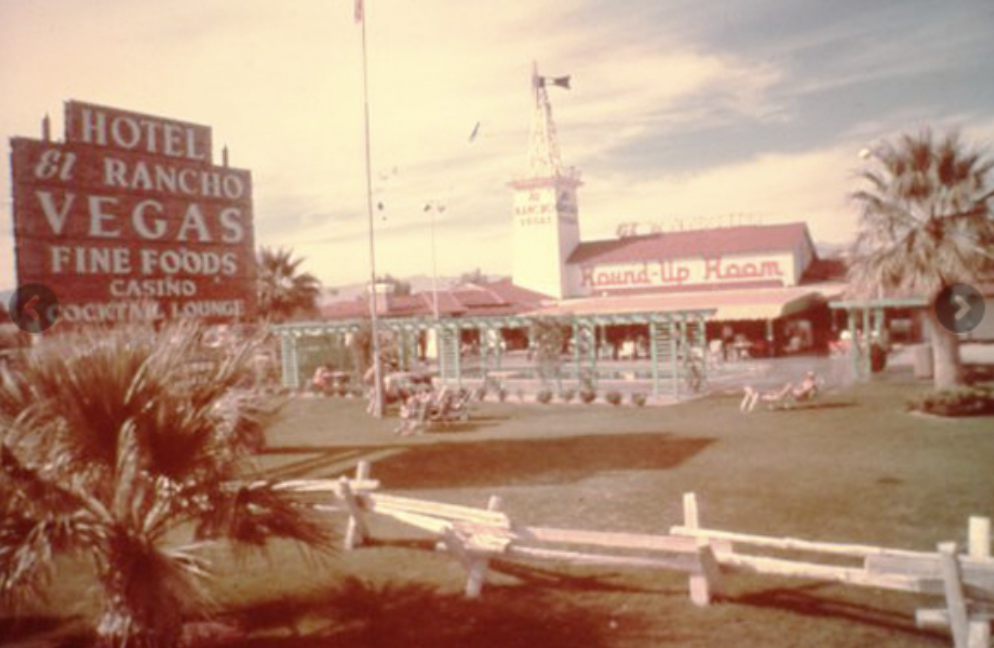
Entertainment tourism was a driving force in Las Vegas at this time. Car culture was still booming, and the Hoover Dam, which had opened in 1935, was a major tourist draw for people wanting to marvel at this engineering colossus. Gaming was now legal, prohibition was well in the rear view mirror, and Las Vegas had already launched a few properties like The Meadows, the Pair-O-Dice and the Hotel Apache, that could offer entertainment, luxury, dining and accommodations all together. The conditions were right for expanded offerings for tourists driving through the desert in search of excitement and fun. Enter stage right California real estate developer and hotelier Thomas Hull. Hull’s entry into Las Vegas is something you would script for a movie. Depending on who you ask, it’s nothing but a tall tale. Still, tale tales and fun origin stories are what make it all great, isn’t it? While on a cross country road trip, Hull’s car breaks down in the middle of the desert outside of Las Vegas. While he’s waiting for a tow truck, he takes note of the huge number of out of town license plates of travelers on their way to the Hoover Dam. Sensing a business opportunity, Hull decided to take a gamble on Las Vegas and to build an all new resort property here to cater to this influx of tourists. Hull already had a successful string of hotels in California, so expanding his empire eastward made a lot of sense. In reality, Hull’s friendship with “Big Jim” Cashman, a local civic booster and business owner probably had more to do with it than out of town license plates, but it’s a romantic story that is way more fun. For his new venture, Hull chose a location that at the time seemed completely out of the way and removed from the existing downtown scene. He chose a piece of property at the corner of Highway 91 (what is now known as The Strip) and San Francisco Avenue, what is today Sahara Avenue. Hull’s vision took the model of resort and expanded it, and paired with a healthy dose of the ever-romantic Wild West theme, and thus the El Rancho Las Vegas was breathed into existence in April 1941. The El Rancho boasted the “Round-Up Room” which was a 300 seat showroom, complete with a western motif straight out of a Hollywood movie set.
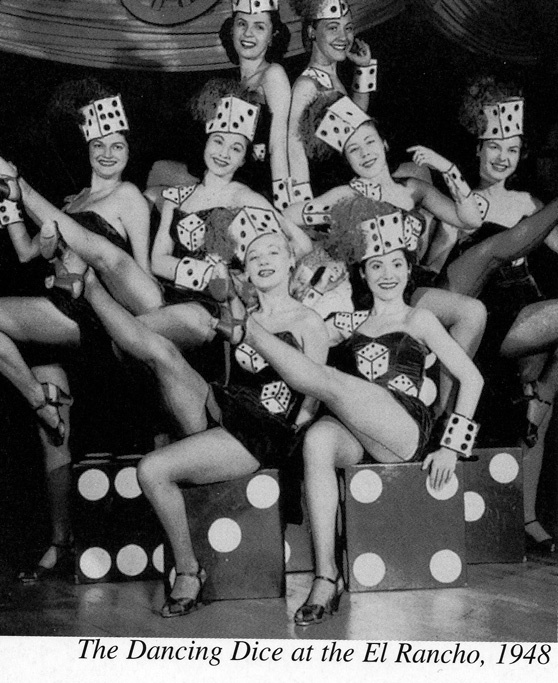
The “El Rancho Starlets” – some of the first showgirls in town, wore revealing western themed attire in keeping with the theme of the property. Later in the 40s, the George Moro dancers became a staple attraction at the El Rancho. While you may not know their name specifically, you’ve undoubtedly seen one of the iconic images of the dice girls – an oft republished image of eight leggy showgirls wearing jaunty hats in the shape of gaming dice, complete with dice cuffs and bustiers. It’s such a fun snapshot of early Las Vegas entertainment, and one that undoubtedly caught the attention of many early tourists looking for a bit of fun and escapism among the sagebrush.
The Round Up Room also attracted stars whose names may be unfamiliar now, but were famous at the time, like the Delta Rhythm Boys, and Pierre Carta and Desert Caballeros. Later in the decade, the Round-Up Room was remodeled to expand the footprint of the stage and became known as the “Opera House.” It was here in 1947 where Sammy Davis Jr. first played Las Vegas with the Will Mastin Trio. The Will Mastin Trio was a vaudeville act that both Sammy’s parents had been a part of, and that he started performing with at the young age of 3. Sammy honed his talents for decades with this troupe, and would be involved with them throughout the 40s and 50s. The year they played the El Rancho was also the same year the Trio’s popularity was given a major boost when Frank Sinatra personally requested they open for him (instead of the Nicholas Brothers) for three weeks at the Capitol Theatre in New York in 1947. But that my friends, is of course a topic for a whole other episode!
Showrooms Blossom
It wasn’t just The El Rancho that got going in the 1940s. Other significant properties opened during this decade, and their showrooms were what cemented Las Vegas as not just a gaming destination, but an entertainment destination. Only 18 short months after the opening of the El Rancho, the Last Frontier opened in 1942. This ranch-style resort sported a similarly popular Western theme like the El Rancho and featured Native American Zuni craftsmanship for interior decor. The Last Frontier showroom, complete with wagon-wheel chandeliers, invited big band talent and orchestras to perform for guests. But the performer that helped put Vegas on the map in 1944 was none other than “Pistol-Packin’ Mama” Sophie Tucker. Tucker was a worldwide sensation, and her ballsy persona fit right in with the mix of rough and tumble western town that was growing in sophistication. So, who was Sophie Tucker? If you’re like me, you probably first heard her name in the lyrics for “Roxie” in the Broadway musical Chicago.
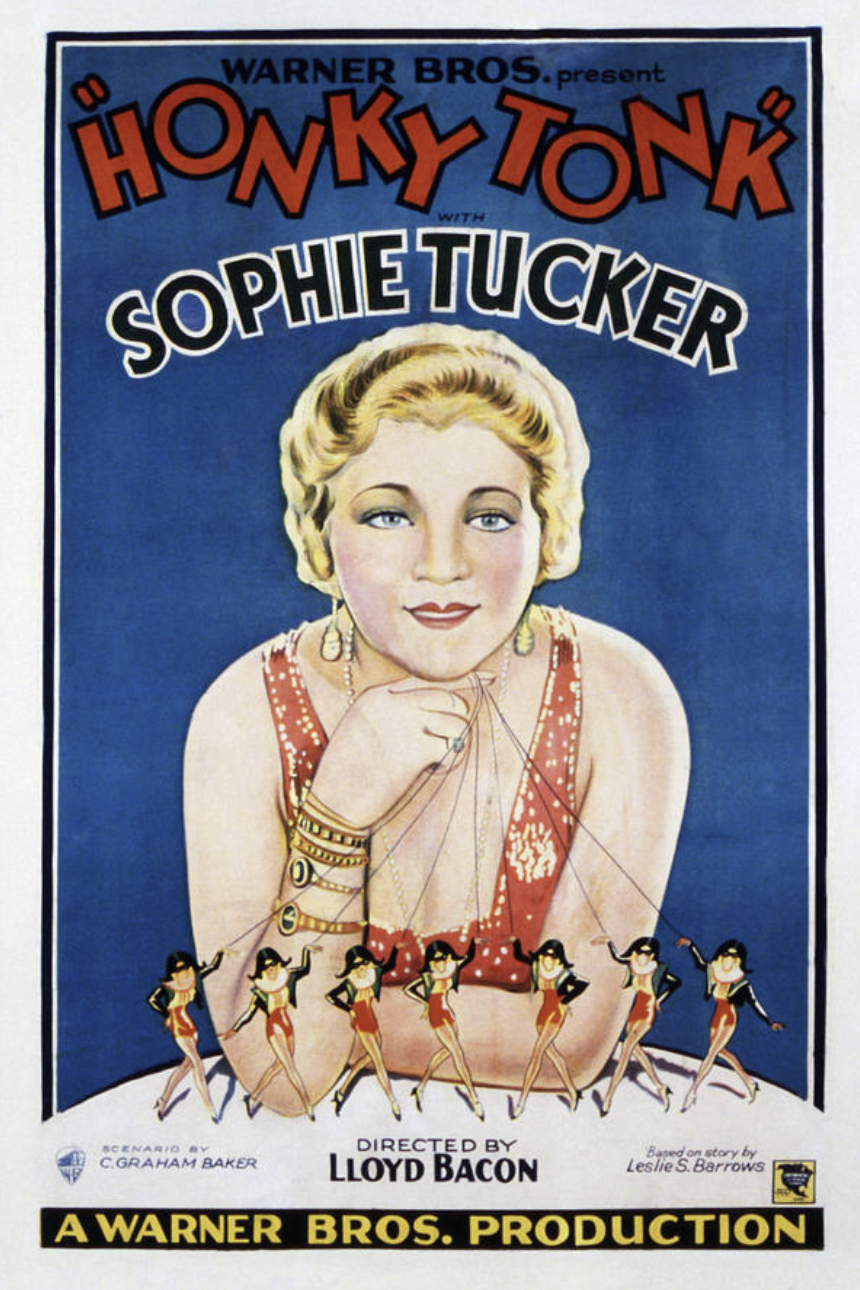
Sophie Tucker was a singer, comedian, actress, and radio personality. Known for her powerful delivery of comical and risqué songs, she was one of the most popular entertainers in the U.S. during the first half of the 20th century. She got her start in New York in the 1920s, coming up through the vaudeville circuit and the Ziegfeld Follies. She also was friends with jazz stars like Ethel Waters, and was one of the early performers to introduce jazz to white vaudeville audiences.
As her popularity grew, she performed internationally, even singing for King George V and Queen Mary at the London Palladium. Sophie’s star power and appearance at the Last Frontier gave Las Vegas credibility as an entertainment beacon. But it wasn’t just the Last Frontier that was bringing in big names. The day after Christmas in 1946, the fabulous Flamingo opened in Las Vegas, a beacon of glamour and lush luxury in the middle of the desert. The showroom at the Flamingo welcomed comedian Jimmy Durante, an established radio and vaudeville star as their first headliner. Jimmy’s star power continued to cement Las Vegas as an entertainment draw, and other big names soon followed. Tap-dance legend Bill “Bojangles” Robinson, Broadway and screen star Lena Horne of “Stormy Weather” fame, and Broadway’s Pearl Bailey all headlined in the showrooms of the El Rancho, Flamingo, and Last Frontier in the 1940s. I’ll cover the careers of all of those talented people in future episodes, because there is so much to uncover on all of their contributions to entertainment history.
One of the fun things about doing this podcast is finding little nuggets of connection to Las Vegas in ways I don’t expect. When watching a documentary recently about Liza Minnelli, I was introduced to the name Kay Thompson. Though I had known her face and name without realizing it, I had no idea that Kay Thompson had ever toured through Las Vegas. (If you haven’t ever watched the scene “Think Pink” from Funny Face with Audrey Hepburn, you really need to see Kay steal the show.) Thompson was close friends with Judy Garland and Vincent Minnelli and was the godmother of Liza Minnelli, but was an incredible multi-hyphenate in her own right: an accomplished singer, vocal arranger, vocal coach, composer and musician. She coached stars like Lucille Ball and Bette Davis, created nightclub acts for Marlene Dietrich and Ginger Rogers, made appearances on variety shows like The Ed Sullivan Show and The Tonight Show, and if that wasn’t enough, she was also the author of the popular Eloise children’s books. Kay was a true larger-than-life persona and had the type of career you wouldn’t believe if it weren’t all true. In fact, she’s such an icon whose impact on the entertainment world is so far reaching that I’m a bit embarrassed I wasn’t on a first name basis with her until recently. But, her connection to Las Vegas entertainment history was what caught my eye for this episode. Kay Thompson and The Williams Brothers performed in 1947 at both their tour debut in the Round Up Room at the El Rancho and later at the Flamingo on their first tour headlining around the country. Kay was a big star in her own right, but she wanted to branch out from working at MGM. This tour was wildly successful, becoming the highest paid nightclub act in the world at the time. The Williams Brothers, her backup singers and dancers, included Bob, Don, Dick and of course, Andy. Andy Williams was Kay’s protege and reportedly also her secret lover. He would go on to launch an incredible career in his own right as a blockbuster singer and later as the host of his own TV variety show. I think it’s very cool to think about the role that Las Vegas played in the launchpad of this triumphant nightclub tour.
The other fun thing I like about making this podcast is the unexpected synergy between classic Hollywood and Las Vegas, and I find these connections both charming and fascinating. One such connection was the development of the Grace Hayes Lodge in 1947.
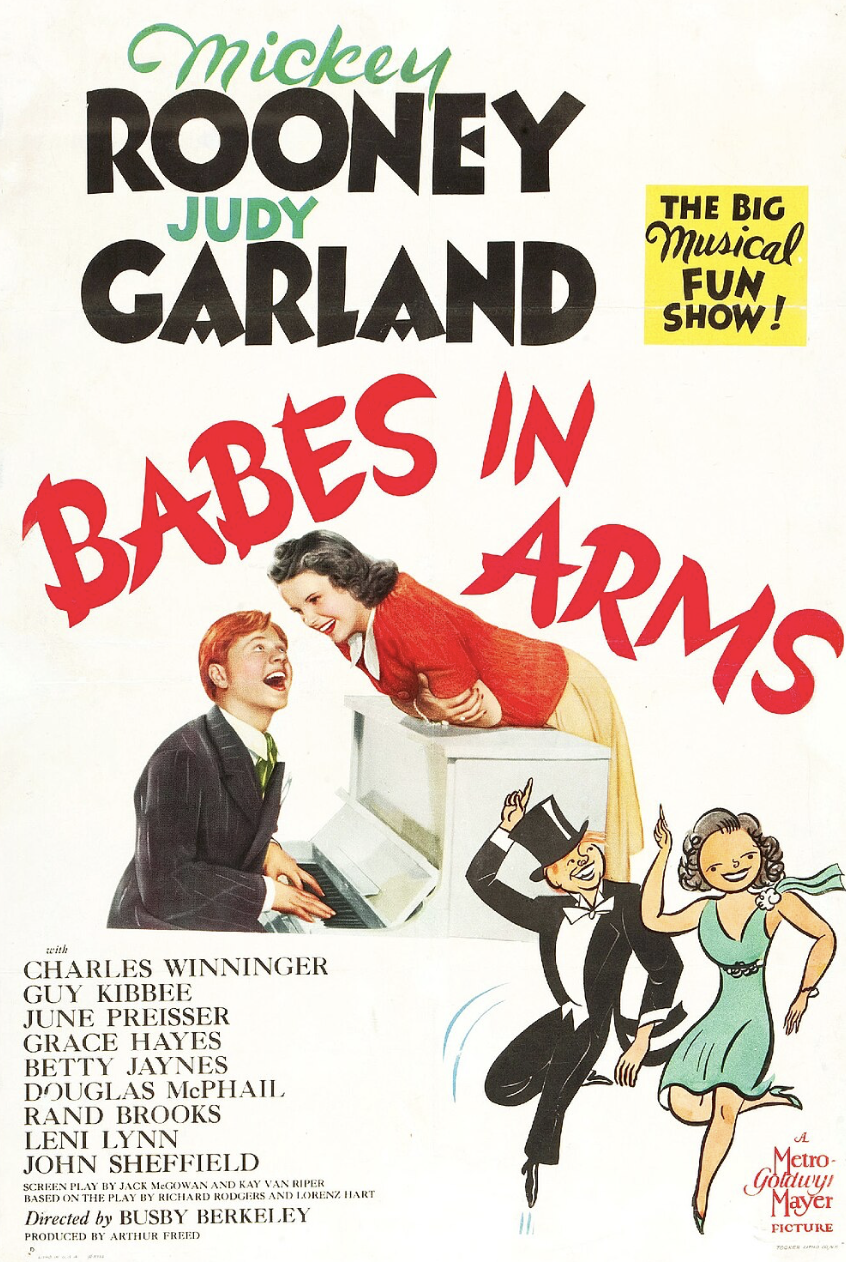
Grace had been a film and Broadway star in the 1920s and 1930s, and she starred in such films as 1939’s Babes in Arms with Judy Garland and Mickey Rooney, directed by Busby Berkeley. In the 40s, Grace took the prohibition-era nightclub The Red Rooster and rebranded it under her own name. The Grace Hayes Lodge was a glamorous Las Vegas staple for a time, and frequented by many famous faces, including Hollywood tycoon, multi-millionaire, multi-hyphenate Howard Hughes and famed mobster Benjamin “Bugsy” Siegel. I love uncovering little gems like this as I research my episodes, and I’m always delighted to find Tinseltown-Vegas connections.
Easy Come, Easy Go
The 1940s would continue the success of the booming quickie marriage and divorce industries in Las Vegas. Starting in the 1930s, legislation had changed to make it easier and faster to both couple, and uncouple in Nevada. Originally conceived as a way to boost tourism, this trend continued on in the 1940s, and as we know, is still a major player in the tourism market to this day. World War II would provide even more of an impetus to come and take advantage of the liberal rules for marriages and divorces in Nevada, perhaps in answer to the bout of quickie wartime marriages that had taken place early in the decade. As had been true in the 30s, celebrities flocked to Las Vegas to both tie the knot, and tie one on after a divorce was final. In the 1940s, these included both stars Stan Laurel and Oliver Hardy, of the famous comedy duo Laurel and Hardy. Hollywood superstar Judy Garland, of Wizard of Oz fame, tied the knot in Las Vegas in 1941 to British bandleader David Rose, for the first of her five marriages. And a then-unknown celebrity came to get her quickie divorce in 1946 in Las Vegas, when she left her first husband, Jim Dougherty. That unknown celebrity? Norma Jean Dougherty, later better known by her stage name of Marilyn Monroe. Clearly, Vegas was continuing to be the place for both celebrities and regular folks alike to come and celebrate nuptials of all types.
The Impact of World War II
But we can’t talk about the 1940s without touching on World War II, even in a podcast about entertainment history. Because, as everywhere else, World War II touched Las Vegas significantly, and shaped the town’s trajectory.
In the early 1940s, if you were in Las Vegas, you would have been hearing about World War II through newsreels playing before your feature film at the El Portal movie theater downtown. You could have been attending the opening of the El Cortez casino, which opened one month prior to Pearl Harbor in 1941. You could have been hearing about the opening of the Gunnery Range (now known as Nellis Air Force Base) to help prepare America for our entry into the war. In fact, the wartime economy was actually a huge boom for Las Vegas in general, as over 40,000 soldiers passed through town over a three year period. And Las Vegas was still welcoming many tourists driving into town looking for some distraction from the war, despite gasoline rationing.
But nothing would have brought the war home to Vegas more than the dramatic death of Hollywood icon Carole Lombard. Carole was the definition of the Hollywood bombshell: glamorous, blonde and vivacious, and she starred in a string of movies in the 1930s that showcased her unique and energetic comedic style. She was the queen of screwball comedies and she essentially created and owned this genre. Her major roles included Howard Hawks’ Twentieth Century, My Man Godfrey, Alfred Hitchcock’s Mr. & Mrs. Smith and Ernst Lubitsch’s To Be or Not to Be. In addition to her professional success, Carole found personal success too when she married Clark Gable, the biggest Hollywood male star for decades. By all accounts they were deeply in love and were Hollywood’s power couple. But tragedy struck in January of 1942 when Carole attempted to return home after a war bond tour. Along with her mother and 22 active duty Army servicemen, Carole boarded TWA Flight 3 in the late evening of January 16 when the plane refueled in Las Vegas before making the final jump to California. Tragically, in the pitch black of the night, the plane crashed into the mountains outside of Las Vegas and all aboard were killed. The cause of the plane crash would later be attributed to navigational miscalculations from safety beacons being disabled as a precaution against Japanese enemy aircraft coming into American airspace.
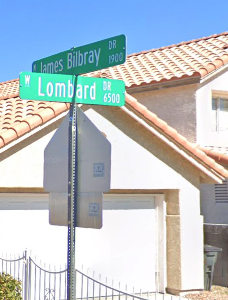
This truly tragic event brought the war to Las Vegas’ doorstep. Clark Gable, completely distraught and desperate to recover her body, spent weeks in Las Vegas while efforts were made to recover the crash debris. He stayed at both the El Rancho in Las Vegas and in Goodsprings, Nevada, which was a small town very close by to the crash site. If you visit Pioneer Saloon in Goodsprings, you can see an entire room dedicated to Carole and Clark’s tragic love story, and to his stay while he waited for the body of the love of his life to be recovered. This story of wartime heartbreak is truly gripping, and seems ripped straight from the Hollywood headlines.
Hollywood Connections
The 1940s, though dampened by the war, were also a time for major Hollywood films to continue to be made in Las Vegas. Perhaps a war weary nation still needed some escapism, and films are the perfect place to escape. There are a couple of standouts from this period, and they featured both big box office stars and soon-to-be household names. In post war Las Vegas, the Chamber of Commerce was actively looking for publicity opportunities that would feature Las Vegas in a positive light and encourage tourism, and the existing Helldorado Days festivities were the perfect vehicle to stoke some good old fashioned wild west propaganda for the desert town. The Helldorado Days (two L’s) were a real life rodeo and parade launched in the 1930s as a tribute to the Old West, and this was the perfect backdrop for the 1946 film Heldorado (1 L). Legend has it that film censors made the producers change the name to include only 1 L, so as to avoid offending viewers. And what better leading man for this film than the “King of Cowboys” himself, Mr. Roy Rogers and his trusty sidekick and steed Trigger. Heldorado is a fun jaunt through a fabricated Old West that really only existed in the movies, and it’s still available on streaming platforms if you want to check it out. A fun sidebar about this movie is that Marilyn Monroe, or Norma Jean as she was known at the time, was in Las Vegas during the film production, and watched the parade scenes being filmed downtown. She even met Roy Rogers and rode his horse Trigger! How’s that for an unknown connection between golden age Hollywood and Las Vegas?
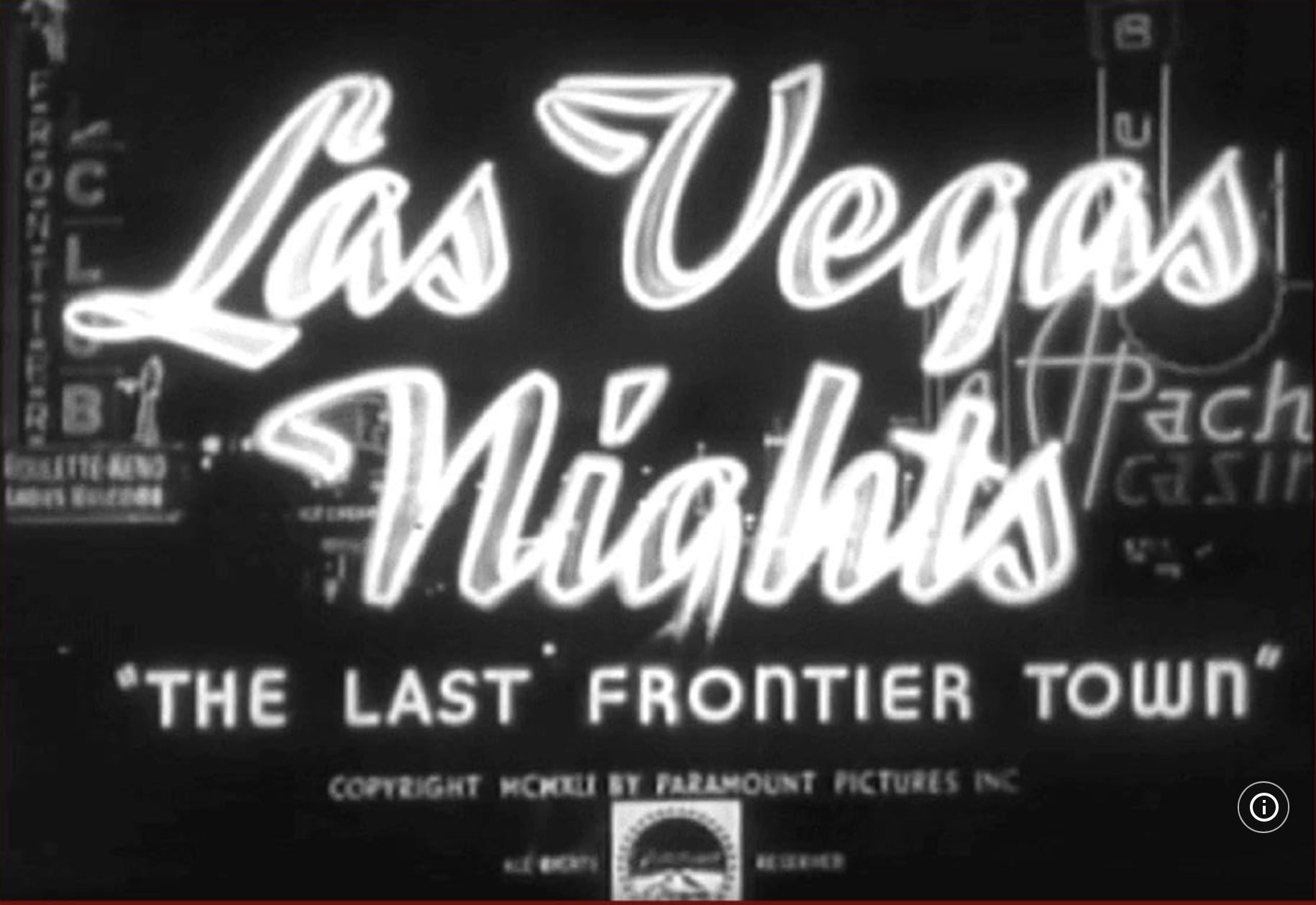
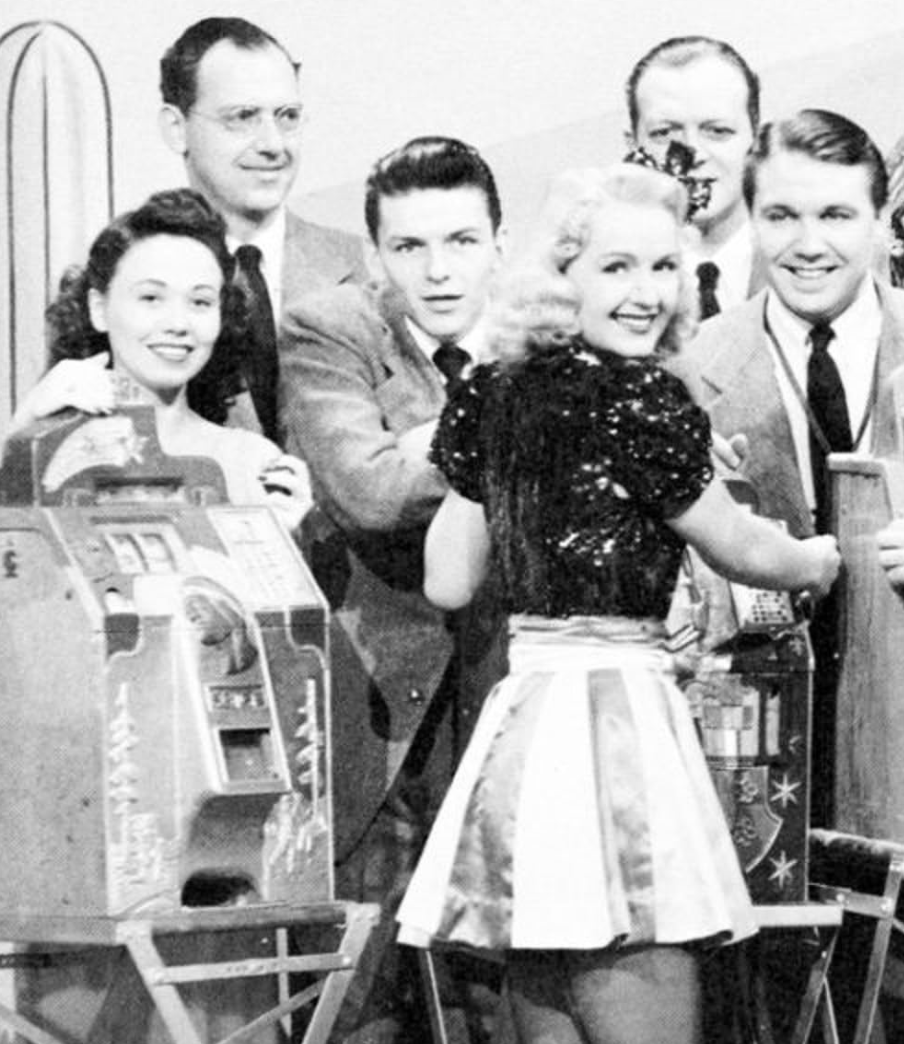
The other interesting film from the 1940s was Las Vegas Nights, a musical about a vaudeville act who inherits an old, beat-up Las Vegas building and decides to try to turn it into a hip new nightclub. This film featured the Tommy Dorsey Orchestra, who were hugely popular at the time, and starred none other than the future Chairman of the Board, Mr. Frank Sinatra, in a blink-and-you’ll-miss it role.
Sinatra was uncredited in this movie, and sang in the film as one of the members of Tommy Dorsey’s band. Sinatra had begun working with Tommy Dorsey in 1939 only a couple of years before this movie was filmed, when he became the band’s lead singer. Las Vegas Nights came out in 1941, when Frank was only 26, and this movie was probably one of his earliest associations with Las Vegas, even though obviously later this would become his regular haunt, and one of the places he is most associated with.
Entering Vegas’ Golden Age
The 1940s would close out on a high note, with the city booming post WWII, a slew of successful showrooms filled with high-powered headliners, and a growing national presence as America’s playground. The 50s would change everything for Las Vegas, and the city would continue to explode onto the entertainment scene. From Liberace to the Rat Pack, to the importing of extravagant Parisian productions and the mythologizing of the Las Vegas showgirl, things were going to continue to get exciting. We will spend the next few episodes deep diving into all these iconic acts that you’ve heard of, and uncover other hidden gems that you haven’t heard of that may surprise you. Until then, my friends!
Show Notes
http://www.kaythompsonwebsite.com/kayographies_1_nightclub.htm
http://sammydavisjr.info/biographical/about-sammy/1925-50/
sky000035. J. T. McWilliams Photograph Collection, 1932-1952. PH-00025. Special Collections and Archives, University Libraries, University of Nevada, Las Vegas. Las Vegas, Nevada. http://n2t.net/ark:/62930/d1qj78b29
Gambling On a Dream, Lynn Zook
 On With The Show
Leave a comment